

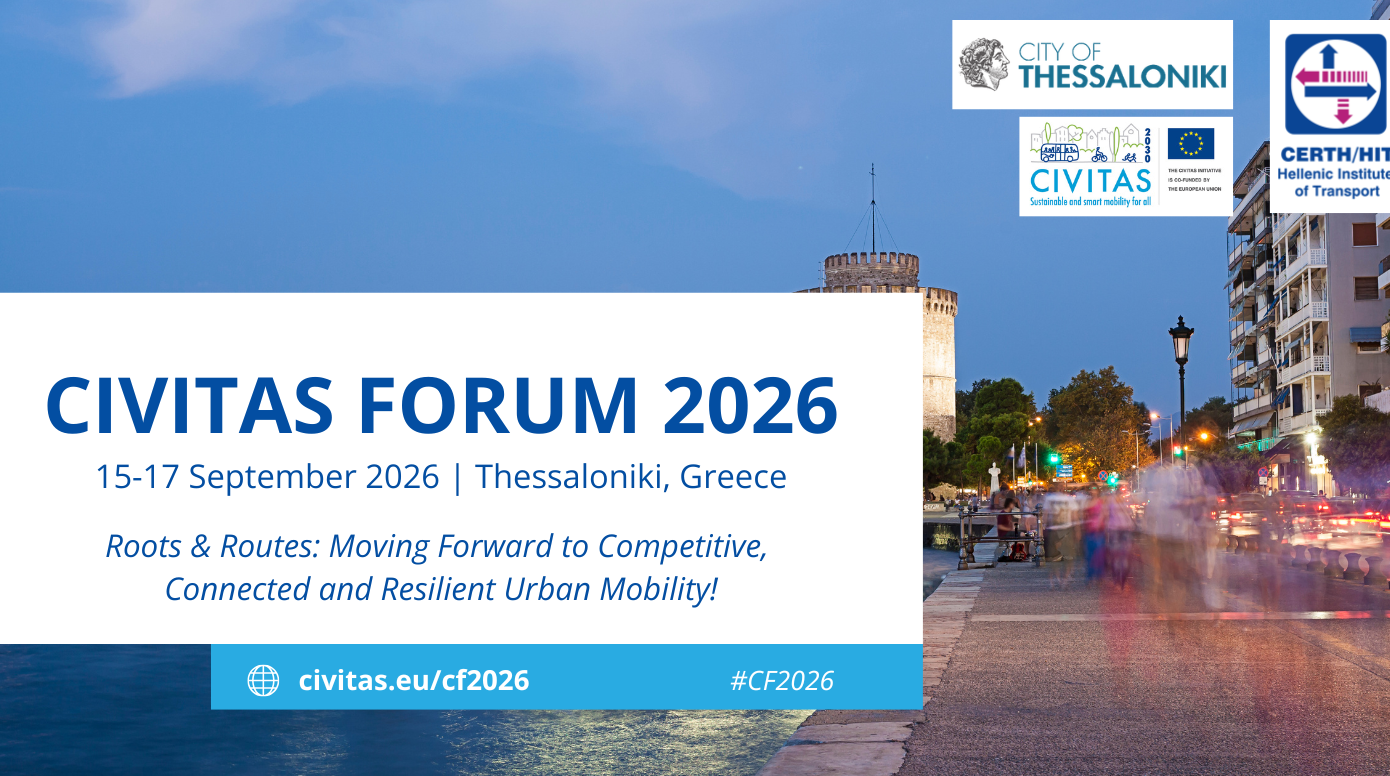
From 15 to 17 September 2026, GEMINI joined the European urban mobility community in Thessaloniki for the CIVITAS Forum 2026, one of Europe’s flagship events for sustainable urban mobility.
Held under the theme “Roots & Routes: Moving Forward to Competitive, Connected and Resilient Urban Mobility,” this year’s Forum brought together city representatives, policymakers, researchers, industry experts and mobility practitioners to exchange experiences and discuss how successful innovations can move from pilot projects towards wider deployment.
Bringing GEMINI results to the CIVITAS community
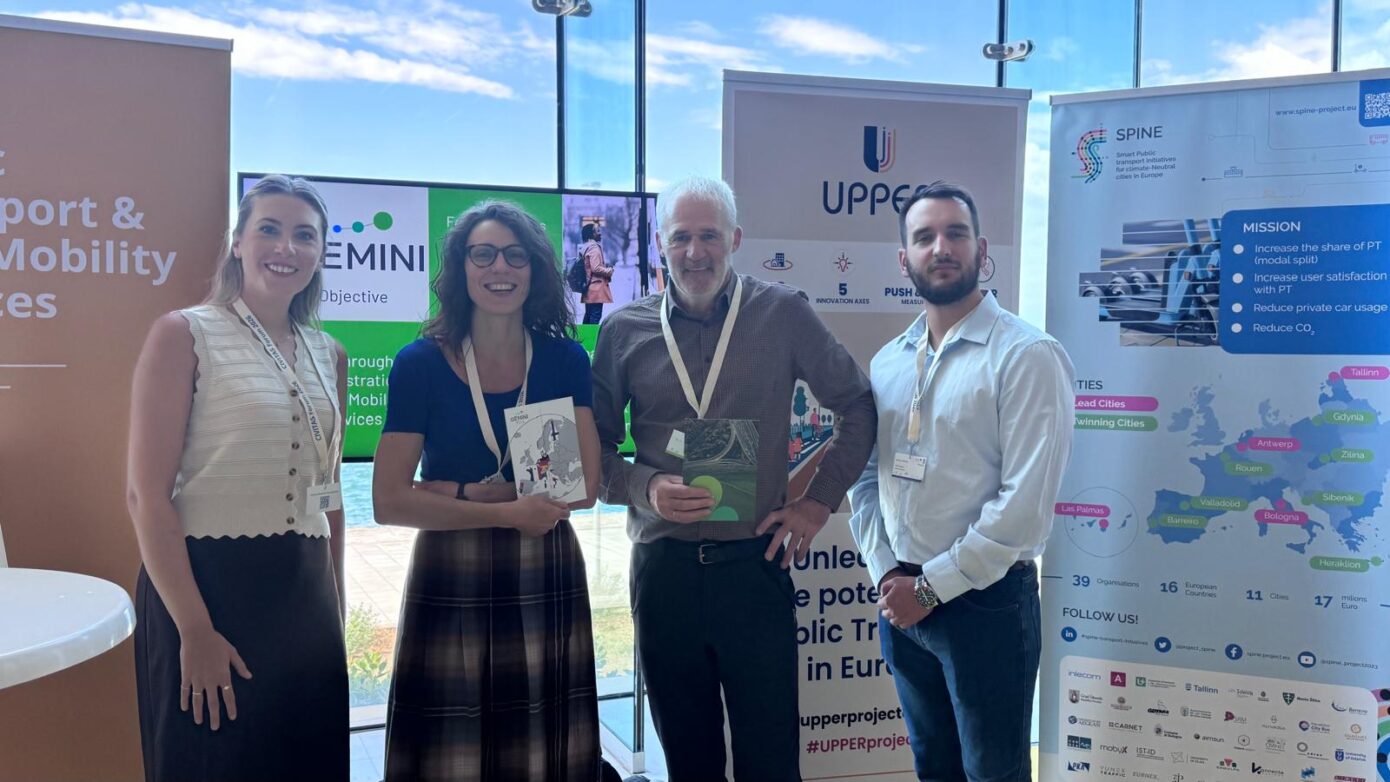
GEMINI was represented in the “Public Transport & New Mobility Services” Thematic Corner, where project representatives engaged directly with Forum participants and GEMINI results were showcased through dedicated presentations during the event. With the project approaching completion, the Forum provided an important opportunity to discuss how innovative shared mobility solutions can contribute to more sustainable and connected mobility systems and to share the experience developed across GEMINI’s Mobility Living Labs.
A particular focus was placed on the lessons emerging from GEMINI’s work on shared mobility beyond major urban centres.
Sharing the GEMINI Handbook on Shared Mobility
Mobility expert Marianne Weinreich, who contributed to GEMINI’s work with the Copenhagen Mobility Living Lab, took part in two panel discussions during the Forum, presenting and discussing the GEMINI Handbook on Shared Mobility. The handbook was developed in close cooperation with the Danish partners Region Hovedstaden and Rudersdal Kommune and is designed to support municipalities outside larger cities that want to work strategically with shared mobility.
Her participation included the sessions “City-Region Connectivity and TEN-T Urban Nodes: Integrated Planning and Multimodal Infrastructure” and “Shared & Micro-Mobility Shift: New Mobility Services in Cities.”
During the first session, Marianne introduced some of the handbook’s main lessons before joining the panel discussion. Five key principles were highlighted:
- Treat shared mobility as an ongoing process, not simply a pilot
- Integrate it into wider planning and organisational structures
- Recognise the importance of physical mobility hubs
- Build strong partnerships between the actors involved
- Use data as a driver for planning and continuous improvement.
These principles reflect an important lesson from GEMINI: successful shared mobility is not only about introducing new vehicles or digital services. Long-term success also depends on governance, cooperation, physical infrastructure, data and strong links with local communities.
Exploring Mobility as a Commons
GEMINI’s presence at CIVITAS also contributed to a broader discussion around Mobility as a Commons (MaaC): an approach in which communities can play a more active role in shaping, managing and taking responsibility for local mobility solutions.
The work presented around MaaC explores concepts such as shared ownership, shared responsibility, shared operations and shared knowledge, with community-based mobility solutions bringing together citizens, businesses, governance, knowledge and financial resources.
The examples underline how mobility solutions can evolve from services delivered to communities into solutions developed and managed with them.
From project results to future mobility solutions
The CIVITAS Forum offered GEMINI an important opportunity to share its results with the wider European mobility community, exchange experiences with cities and practitioners, and discuss how the lessons developed within the project can continue to support mobility innovation beyond its lifetime.
As GEMINI moves towards its final months, these exchanges are particularly valuable in ensuring that the knowledge, methods and practical tools created throughout the project can continue to support cities and regions working towards more inclusive, connected and sustainable mobility.