

As part of GEMINI’s ongoing dissemination and knowledge-exchange activities, the project’s Mobility Living Lab in Rudersdal Municipality (Greater Copenhagen) was taken up as a case study by the “Transformative Urban Living Labs” design studio at TU Berlin’s Habitat Unit (Chair of International Urbanism and Design), led by Dr. Oliver Lah. The studio, co-hosted with MIT, the Wuppertal Institute and the Urban Living Lab Center (a UN-Habitat Collaborating Center), works with real living labs around the world to develop mobility and urban design concepts.
Team Rudersdal — students Pedro Cadena, Johanna Scocco, Juan Gavieiro, Hiroki Miyata and Valentina Lucibello Piani — set out to answer how private car use and ownership in Rudersdal could be reduced by strengthening public transport and active mobility, supported by shared mobility. Their work included:
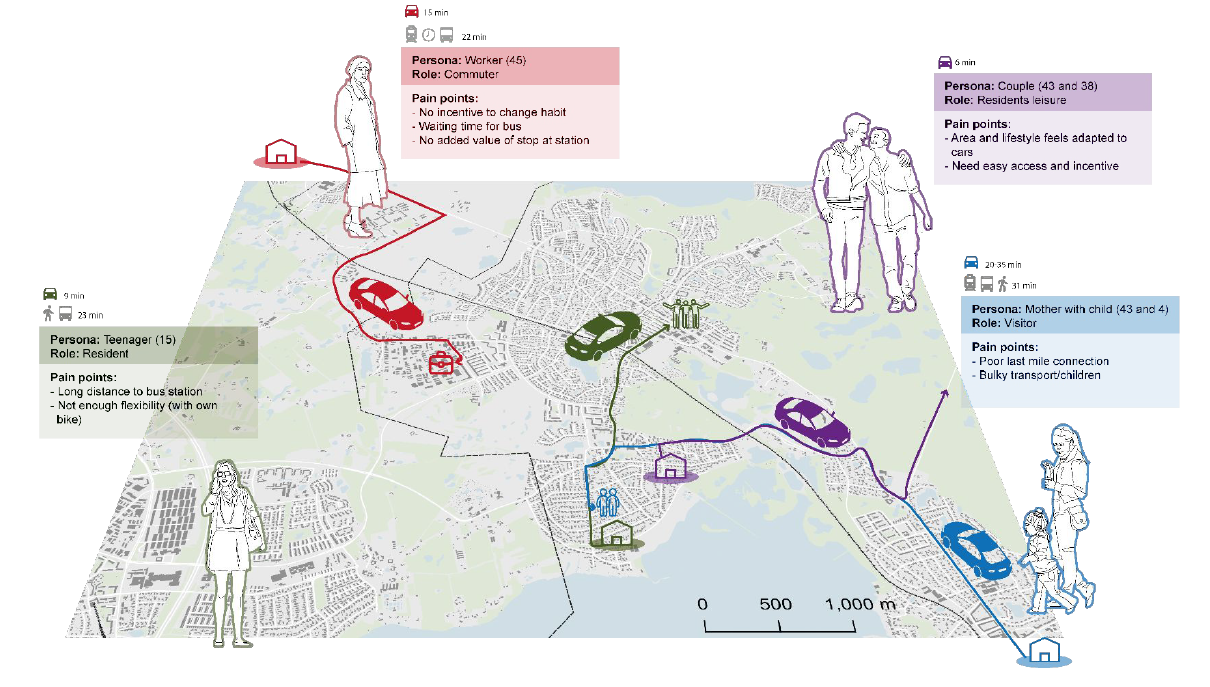
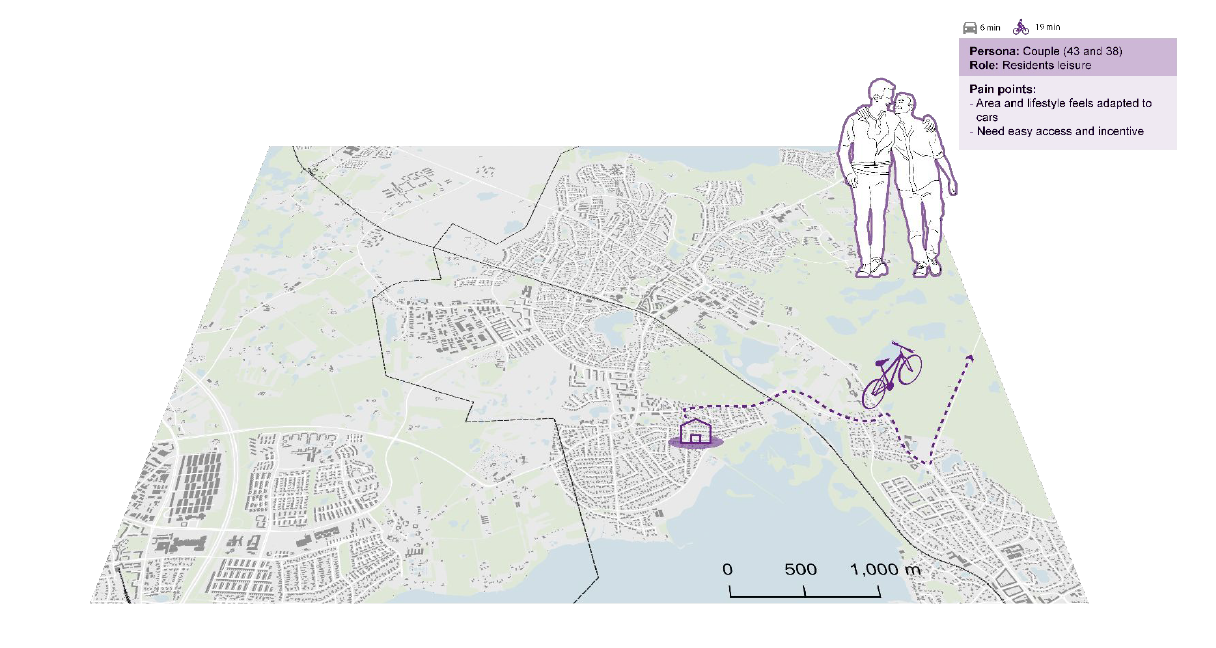
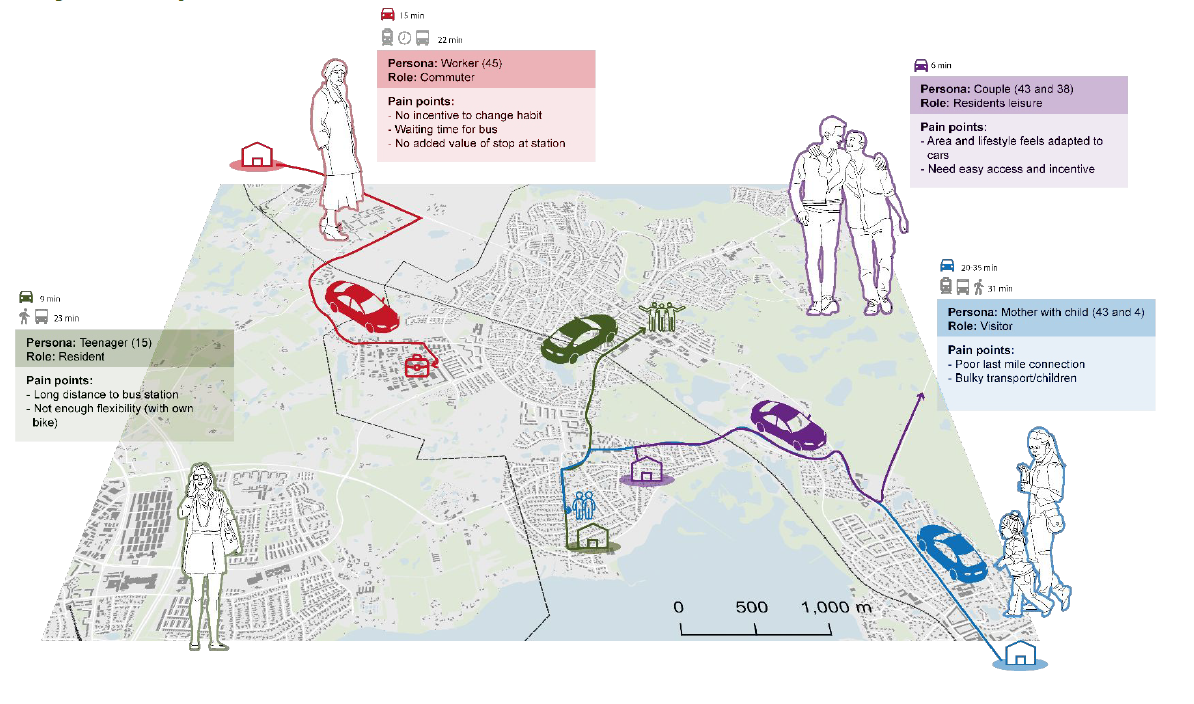
- Persona-based user research, mapping current and possible future journeys for a commuting worker, a teenage resident, a visiting family, and a resident couple, each with distinct pain points around access, waiting times and last-mile connections.
- A COM-B behavior-change approach and an accompanying Theory of Change, linking concrete outputs (hub redesign, new infrastructure, partnerships, communication) to intermediate outcomes and the project’s impact goals of reduced car use and more inclusive, higher-quality mobility spaces.
- Physical intervention proposals, including a redesign of Birkerød Station with covered bike parking, bicycle services, a market and café, and a new mobility hub at Bistrup Trafikplads reusing an abandoned building as a community center.
- Proposals for new shared-mobility infrastructure and partnerships in the Birkerød business park.
- Ideas for evolving the current “HUB” communication campaign, embedding sustainable mobility into local events and channels such as Rudersdal Library, and exploring gamification and reward schemes(e.g. per-kilometre incentives for switching from car to bike) drawing on examples from Florence, Belgium and elsewhere in Europe.
This collaboration shows how GEMINI’s Living Labs serve not only as demonstration and testing sites for shared mobility solutions, but also as a resource for education and applied research, generating fresh, user-centered ideas that can feed back into ongoing planning in Rudersdal Municipality.
Read more about the Rudersdal Mobility Living Lab: https://www.geminiproject.eu/category/copenhagen/ Read more about the TU Berlin design studio: https://habitat-unit.de/en/teaching/wise-2024-25-transformative-urban-living-labs/